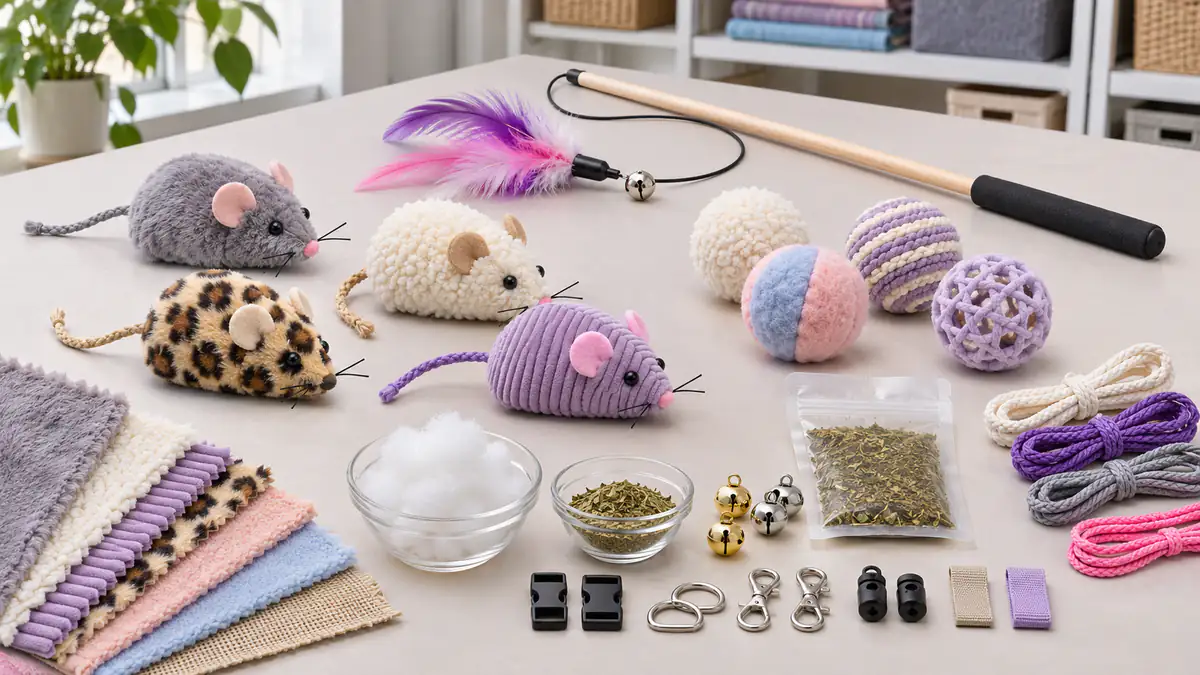
A capable cat toy manufacturer should turn each design into a controlled construction, test and evidence package. A teaser wand, plush mouse, rolling ball and catnip toy use different materials and expose different attachment, cord, seam, filler and packaging risks. Buyers need product-specific records rather than one generic “toy test.”
Quick answer: before choosing a cat toy manufacturer, verify its bill-of-materials controls, approved component suppliers, seam and attachment specifications, cord and detached-part checks, finished-product durability methods, lot traceability, packaging review and change-control process. Ask the factory and qualified laboratory to confirm the tests and market requirements for the exact design.
This guide provides a sourcing and quality-control framework. It does not replace legal advice, a market-specific risk assessment or laboratory confirmation of applicable requirements.
Segment cat toy constructions
Start the supplier review with construction families. Product names hide the joints and material interfaces that determine how a toy fails. A plush mouse may contain a shell fabric, embroidery, fill, catnip pouch, squeaker or bell, tail cord and bonded trim. A teaser combines a handle, connector, cord, swivel, feathers and a replaceable toy.
Map each product family to its control points
| Construction family | Key control points | Typical evidence |
|---|---|---|
| Teaser wand | Handle end, swivel, cord, knot, crimp, feather or toy attachment | Component list, cord specification, retention method, pull and cycle records |
| Plush toy | Fabric, seam allowance, thread, fill, embroidery, trim, bell or catnip pouch | BOM, seam plan, stitch record, attachment and fill-access checks |
| Ball or rolling toy | Diameter, shell joint, holes, inserts, surface finish and impact behavior | Drawing, dimensions, material declaration, drop and compression results |
| Catnip product | Botanical identity, origin, processing, moisture control, inner pouch and claims | Supplier specification, batch record, import review and packaging approval |
Record intended use and excluded use for each SKU. State whether the toy supports interactive play, batting, chasing, carrying or supervised chewing. Define the target cat size, expected handler interaction, replaceable parts, cleaning method and storage conditions. The team can then connect foreseeable use to the correct attachment and durability checks.
A buyer evaluating custom cat toys wholesale should also separate stock designs from custom constructions. A color change can affect a coating, dye or printed fabric. A new bell, feather, cord or catnip supplier changes the component evidence. The quotation should identify which parts match an approved platform and which parts need new testing.
Specify fabrics fillers and attachments
A factory cannot control a plush toy from a photo. Give the supplier a numbered bill of materials and connect each item to a drawing callout or approved sample. The BOM should state material composition, weight or thickness, color, finish, dimensions, supplier code and any restricted substitution rule.
- Face fabric and backing: composition, pile, weight, coating, print, color approval and cutting direction.
- Thread and seam: thread type, stitch type, stitch density, seam allowance, backtack and high-load reinforcement.
- Filler: fiber or foam identity, fill weight, cleanliness record, distribution and access prevention.
- Attachments: bell, feather, eye, tail, loop, hook, swivel, connector, adhesive and retention method.
For a plush cat toy supplier, inspect the inside construction before approving the golden sample. Mark the fill opening, catnip-pouch position, seam direction and attachment reinforcement on the technical drawing. A hidden knot or glue point still needs a defined method because an operator must reproduce it during production.
Control catnip as a traceable plant component
Specify the botanical material, plant part, country of origin, processing form, supplier, batch, moisture control, inner pouch material, fill weight and storage life. Require sealed storage and a handling process that prevents cross-contamination or excess moisture. The finished toy record should link its lot to the catnip batch.
Import rules depend on the commodity, processing and country of origin. The USDA Animal and Plant Health Inspection Service directs U.S. importers to check the current Agricultural Commodity Import Requirements database for plants and plant products. If a product is marketed for ingestion or as animal food, the buyer should also review the FDA’s animal-food import guidance and confirm scope with a qualified adviser.
Control small parts and cords
Cat toys often depend on small, moving or flexible components. Bells, beads, plastic eyes, feathers, caps, swivels and cord ends can detach when the attachment method, material or assembly process varies. The buyer should list each part, its retention method and the inspection or test that confirms retention.
Do not apply a children’s-toy small-parts rule to pet products without confirming legal scope. Use a product risk assessment to define the hazards for the cat, handler and household, then have a qualified laboratory identify relevant laws, voluntary methods and product-specific acceptance criteria. CPSC’s general-use product guidance ties certification to applicable rules and recommends review after material or process changes.
Build a retention and cord-control sheet
- Assign a component ID to every bell, trim, eye, connector, feather bundle and cord end.
- Define the approved attachment method, location, material and process setting.
- Specify the inspection fixture, pull direction, rate, duration and failure rule for accessible attachments.
- Measure cord length, loop formation, knot security, crimp position, end finish and movement through connectors.
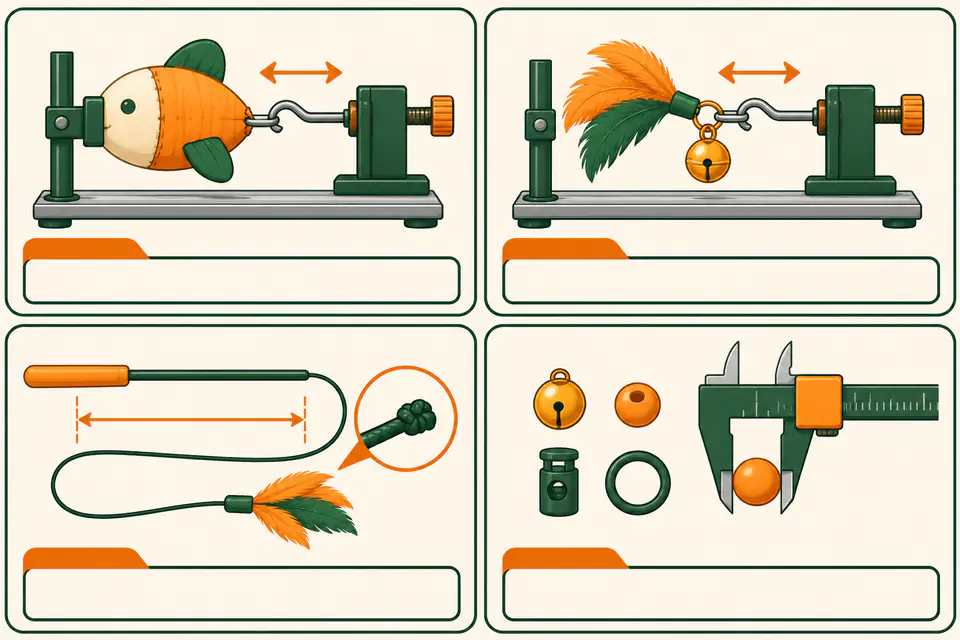
A cat teaser manufacturer should test the complete load path from the handle to the terminal toy. A strong cord does not compensate for a weak swivel, crimp or knot. Record failure location and mode rather than a pass mark alone. That information tells the development team which component or process needs revision.
Define durability and seam tests
Write each test as a controlled instruction. Name the finished-product revision, sample source, conditioning, fixture, grip points, direction, rate, cycles or hold time, acceptance criteria and required photographs. A test result has little value when the next factory or laboratory cannot reproduce the setup.
Match tests to the construction failure path
| Test area | Method fields to define | Evidence to record |
|---|---|---|
| Seam pull | Seam segment, grips, direction, rate, load or displacement, hold, failure rule | Peak result, seam opening, thread break, fabric tear, photos |
| Attachment retention | Component, clamp, load path, rate, duration and prohibited movement | Detachment, deformation, slippage, break location, photos |
| Cord and teaser cycle | Stroke, speed, cycles, bend point, connector movement and stop criteria | Fray, knot movement, crimp shift, swivel wear and terminal condition |
| Ball impact or compression | Orientation, contact surface, impact sequence or compression path | Crack, joint opening, insert release, permanent deformation |
Do not copy one load value across plush, teaser and molded products. Geometry, materials and use patterns change the stress path. Ask the laboratory to review the drawing and risk register before it quotes the test program. The report should identify the exact sample and method rather than state “pull test passed” without conditions.
Use production-intent samples. Hand samples can hide factory variation in stitch density, seam allowance, crimp setting, glue application or fill weight. After development approval, run the critical checks on pilot units from the intended line. Link the results to the approved golden sample and production specification.
Petlland’s dog toy safety testing plan explains how buyers can connect failure modes, chemical evidence and retest triggers. The same risk-based structure applies to cat toys, but the construction-specific methods and limits need a separate review.
Review packaging warnings and evidence
Packaging should identify the product, intended use, responsible business, lot or batch, care instructions and the warnings supported by the risk assessment. State supervision, inspection and replacement instructions in language the target customer can follow. Keep online listing claims consistent with the physical package.
A warning cannot replace a construction control. The factory must retain a bell, cord end or seam before the package explains residual risk. Review claim language such as “durable,” “for chewing,” “natural,” “organic,” “food grade” or “non-toxic” against supplier evidence, test scope and target-market rules.
For the EU, the European Commission’s Safety Gate business guidance explains that manufacturers must conduct a risk analysis and keep technical documentation under the General Product Safety Regulation. The documentation should identify the product, relevant risks, mitigation and supporting test reports.
Build the buyer evidence pack
- Approved drawing, component BOM, construction specification and golden sample record.
- Supplier declarations, material or ingredient records, market-specific reports and report-scope review.
- Seam, attachment, cord, impact, compression or cycle-test records tied to the finished SKU.
- Packaging artwork, translation approval, lot coding, inspection criteria and change-control history.
Release production only after the team closes missing evidence and confirms the sample matches the controlled BOM. Use Petlland’s AQL inspection guide to plan shipment workmanship checks, while keeping critical safety-related construction outside routine acceptance shortcuts.
Review the factory’s change process before placing a repeat order. A new fabric backing, fill, catnip source, bell, cord, adhesive, sewing line or assembly fixture can affect approved evidence. Require written notice, risk review and targeted retesting before the substitution enters production.
Petlland’s cat supplies manufacturing page covers product-development support for private-label programs. Buyers should send complete construction and market requirements when requesting samples so the factory can price the correct materials and evidence.
Frequently asked questions
What should a buyer verify before choosing a cat toy manufacturer?
Verify the factory’s component and supplier controls, seam and attachment specifications, cord and detached-part checks, finished-product test methods, traceability, packaging review, inspection records and change-control process.
Which documents should a plush cat toy supplier provide?
Request a controlled BOM, fabric and filler specifications, seam drawing, thread and stitch details, attachment methods, catnip records when used, finished-product test reports, packaging approval and lot traceability.
Does one pull test cover every cat toy?
No. A plush seam, bell, teaser cord and molded insert need different grips, load paths and failure criteria. The buyer and laboratory should define each method from the construction and risk assessment.
Which checks matter for a cat teaser manufacturer?
Review the handle, connector, swivel, cord, knot or crimp, feather bundle and terminal toy as one load path. Define cord dimensions, retention tests, cycle checks and production inspections for each joint.
Do catnip toys need an import review?
Yes, when crossing borders. Plant-material requirements can depend on the commodity, processing and origin. U.S. buyers should check current USDA APHIS requirements and assess FDA animal-food scope when the product is marketed for ingestion.
Send the target market, product sketches, intended use, component list, catnip details and required packaging through Petlland’s contact page. The sample request should identify the evidence and tests the supplier must price.