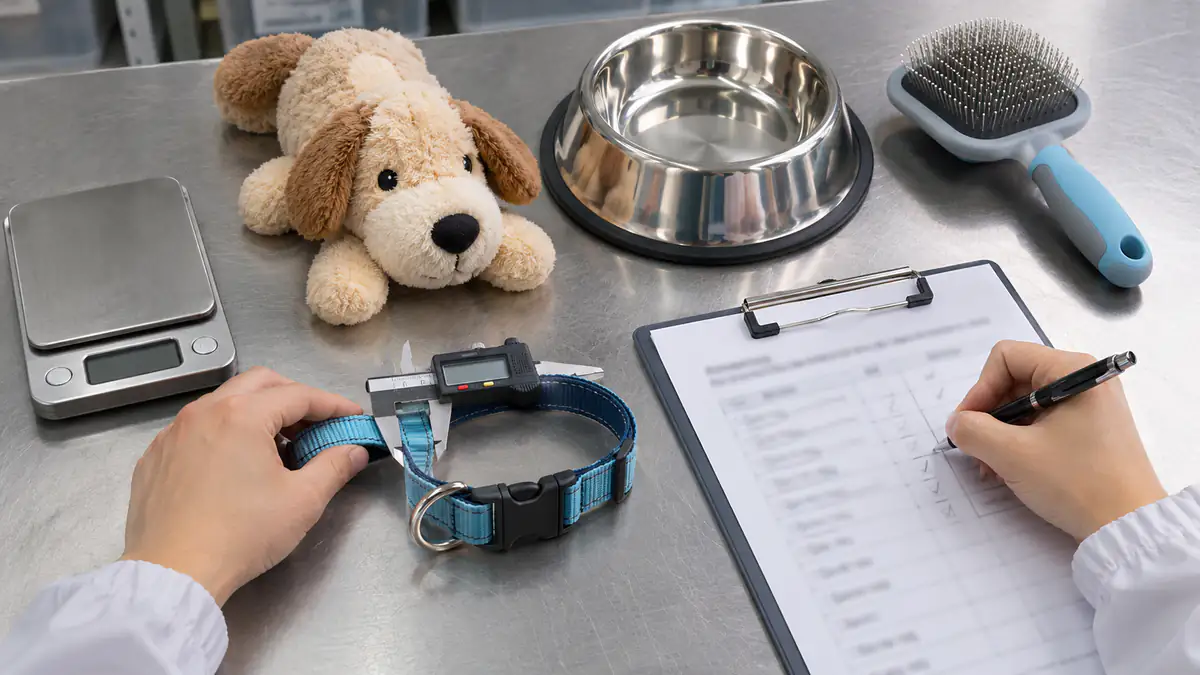
A pet product quality control checklist should combine one shared inspection header, common workmanship and quantity checks, product-specific function and safety modules, evidence rules, and named sign-off fields. The checklist must identify the exact purchase order, SKU, lot, approved specification revision, sample size, inspection method and acceptance limit. It should never rely on a vague instruction such as “check quality.”
The shared section keeps inspection reports comparable across categories. Category modules make the checklist useful for the actual product: a pet bed needs seam and filling checks, while a harness needs buckle, adjustment, load-path and retention checks. The downloadable workbook in this guide includes a sanitized inspection header, 25 shared and category-specific checkpoints, editable result fields, review prompts and a photo naming rule.
This guide defines what belongs in the checklist. Petlland’s AQL inspection guide for pet products explains the wider inspection process and sampling logic. The critical, major and minor defect guide explains how findings should be classified. Keeping the checklist, sampling plan and defect library separate prevents one document from carrying three different jobs.
Build the checklist header
The header establishes which lot and which approved requirements the inspector is evaluating. At minimum, record the supplier and factory, purchase order, SKU, product name, category, lot quantity, sample size, inspection date, inspector, location, target market, specification revision, approved sample reference, agreed inspection level, AQL plan and report number. Use typed fields rather than free-form notes so reports can be compared later.
The supplier and factory fields are not interchangeable. A sourcing partner or trading company can be the commercial supplier while a separate site manufactures the order. Recording both helps preserve traceability. The product field should also name the variant being inspected. Colour, size, packaging artwork or component changes can create a different inspection baseline even when the marketing name stays the same.
| Header field | Sanitized example | Why it matters |
|---|---|---|
| Purchase order | PO-XXXX | Connects the report to the commercial lot |
| SKU and variant | SKU-XXXX / Blue / Medium | Prevents evidence from being applied to the wrong version |
| Specification revision | Rev. C | Defines the approved measurements, materials and limits |
| Approved sample | Sample ID GS-XX | Provides a controlled visual and construction reference |
| Sample and Ac/Re plan | Agreed plan reference | Separates the inspected sample from the full lot |
| Target market | United States or EU | Connects labels, instructions and safety review to the intended market |
ISO 2859-1:2026 provides AQL-indexed lot-by-lot sampling schemes and acceptance or rejection thresholds. It does not decide which construction, function or safety checks belong on a pet product checklist. The buyer must still define observable checkpoints and approved limits for the specific SKU.
Add workmanship and quantity checks
Common checks should appear before category modules. Verify carton count, unit count, assortment, packaging configuration, product identity, visible contamination, general finish, labels, barcodes, required documents and obvious transport damage. State how each check is performed. “Verify quantity” can mean counting cartons, counting units inside sampled cartons, reconciling the packing list, or all three.
Workmanship descriptions must identify the observation and limit. Replace “bad stitching” with the seam location, the condition to inspect, how an opening is measured, and the approved tolerance. Replace “colour wrong” with the approved colour reference, lighting condition and comparison method. A photo can support the decision, but it cannot replace a dimension, force, duration or cycle count when the requirement depends on a measurable test.
- Checkpoint: a clear feature or condition, such as main seam opening.
- Method: the action, tool and setup used to inspect it.
- Approved limit: the drawing, specification, signed sample or market requirement that defines acceptance.
- Sampled units: the number actually checked for that item.
- Finding count: critical, major and minor occurrences recorded separately.
- Evidence: the photo, measurement record or test file that supports the result.
Do not let the checklist silently turn missing information into a pass. If the method or limit is absent, mark the line as unresolved or on hold and obtain an approved instruction. The workbook template flags rows that still need a method, limit, result, corrective action or inspector initials.
Add function and safety checks
Function checks demonstrate whether the sampled product performs its intended job under the agreed method. Examples include operating a buckle, adjusting a strap through its full range, cycling a zipper, checking a bowl on the approved surface, or applying a defined pull, torque or retention test. Record the fixture, force, duration, cycle count and measurement points where they apply.
Safety checks require product-specific risk analysis and qualified approval. The U.S. Consumer Product Safety Commission’s manufacturing best practices recommend identifying hazards, considering foreseeable use and misuse, and using the hierarchy of eliminating a hazard, guarding against it and then warning about it. The EU General Product Safety Regulation requires manufacturers within scope to conduct an internal risk analysis, maintain technical documentation and keep procedures for series production to remain safe. A generic checklist cannot replace that work.
The checklist should therefore point to the approved safety requirement rather than invent one during inspection. Use wording such as “apply the approved retention load for the specified duration” rather than entering an unsupported force. If an inspector finds a new sharp edge, loose component, missing warning or other condition not covered by the library, preserve the sample and evidence, quarantine the affected scope as appropriate, and escalate to the named quality or safety owner.
Add category modules
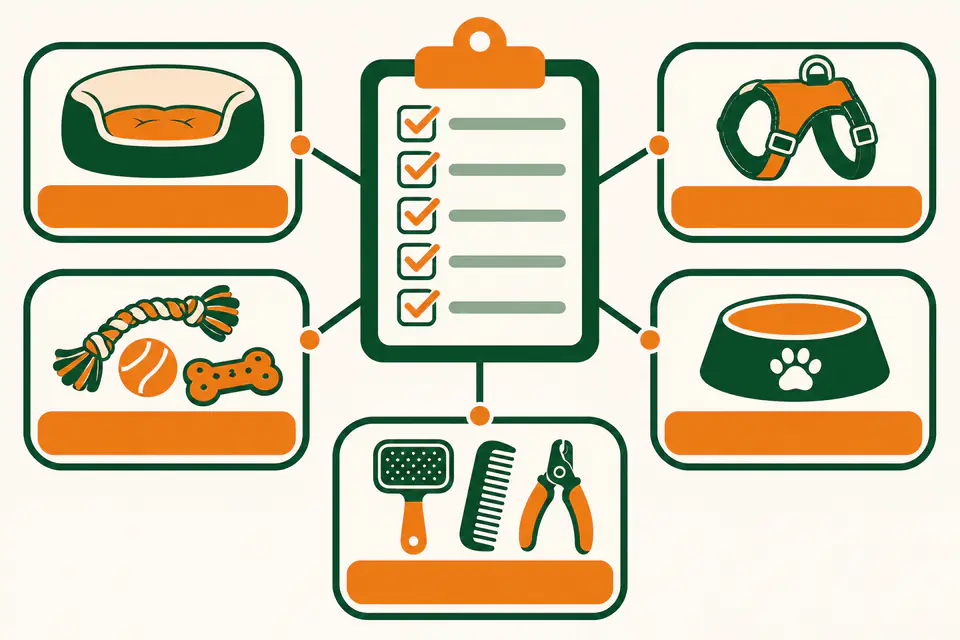
A category module is a reusable group of checkpoints that sits under the shared inspection core. It shortens preparation without pretending every product in a category is identical. Select the relevant module, remove checks that do not apply, and add requirements from the signed specification, approved sample, risk analysis and target-market review.
| Category module | Typical checklist fields | Evidence to retain |
|---|---|---|
| Pet beds | Finished dimensions, seam security, filling containment, distribution, removable cover and closure operation | Measurement views, seam close-ups, filling condition and closure test sequence |
| Harnesses and collars | Buckle engagement, adjustment range, webbing dimensions, load-bearing seam placement and approved retention test | Caliper or tape views, buckle operation, stitch construction and test fixture |
| Pet toys | Seam opening, stuffing access, squeaker or component retention, surface finish and foreign material | Seam close-ups, pull setup, component condition and any isolated foreign material |
| Pet bowls | Capacity, dimensions, accessible rim condition, stability, base performance, finish and decoration | Capacity or dimension record, edge close-ups and stability method |
| Grooming tools | Pin or tooth condition, handle and mechanism cycles, component retention, assembly and finish | Tip close-ups, cycle count, pull or torque setup and finished assembly |
Module ownership matters. Product development should define the specification and approved sample. A qualified safety or compliance owner should approve safety-related methods and limits. Quality staff should translate those requirements into observable inspection steps. The supplier and inspection provider should receive the same controlled revision before production finishes.
For buyers who manage several factories or product families, Petlland’s sourcing and quality-control services can consolidate the checklist format while retaining SKU-specific limits. The factory and quality-control workflow shows how supplier verification, in-process control and final inspection fit together.
Set evidence and sign-off rules
Evidence should be traceable to the inspection line item, lot and sampled unit. Use a consistent photo name such as QC-[PO]-[SKU]-[MODULE]-[CHECK ID]-[SEQUENCE].jpg. For example, QC-PO123-SKU456-TOY-TOY03-01.jpg identifies the order, product, module, check and first image. Keep an overview, a close-up and the measurement or test setup when those views are needed to support the finding.
The final line item should include the observed result, defect count, evidence reference, corrective action, owner, inspector initials and reviewer sign-off. A failed check without an action is incomplete. A passed check without an inspector identity is not traceable. A hold should state what evidence or decision is still required and who owns it.
- Freeze the specification, approved sample and checklist revision before inspection.
- Brief the inspector on methods, tools, sample allocation and escalation rules.
- Record results and defect counts without changing severity to influence acceptance.
- Attach evidence using the agreed filename and sample reference.
- Review failed and held lines, corrective actions and scope before the overall decision.
- Archive the signed report with the PO, test records and approved revision.
The editable template contains the sanitized header, common checks, five category modules, validation lists, review prompts and photo rules described above. Keep only the modules that apply, replace generic limits with approved requirements, and obtain qualified review for safety-related checks.
FAQ
What should a category-specific pet product quality control checklist include?
Include a controlled header, shared quantity and workmanship checks, product-specific function and safety checks, approved methods and limits, sampled quantity, defect counts, evidence references, corrective actions, owners and sign-off fields.
Is a quality-control checklist the same as an AQL plan?
No. The checklist defines what to inspect and how. The AQL plan defines the sample and acceptance or rejection thresholds. The defect library defines how findings are classified. The three documents should reference one another but remain controlled separately.
Can I use one checklist for every pet product?
Use one shared format, not one identical set of checks. Attach the relevant category module and add SKU-, design- and market-specific requirements. Remove inapplicable rows so they do not become automatic passes.
Who should approve safety checks and test limits?
The responsible product, engineering, safety or compliance owner should approve them using the product risk analysis and applicable market requirements. Inspectors should follow the approved method and escalate new or unclear hazards.
How should inspection photos be named?
Use a stable pattern containing the PO, SKU, category module, check ID and sequence number. Keep original files and link each filename to the relevant checklist row and sampled unit.