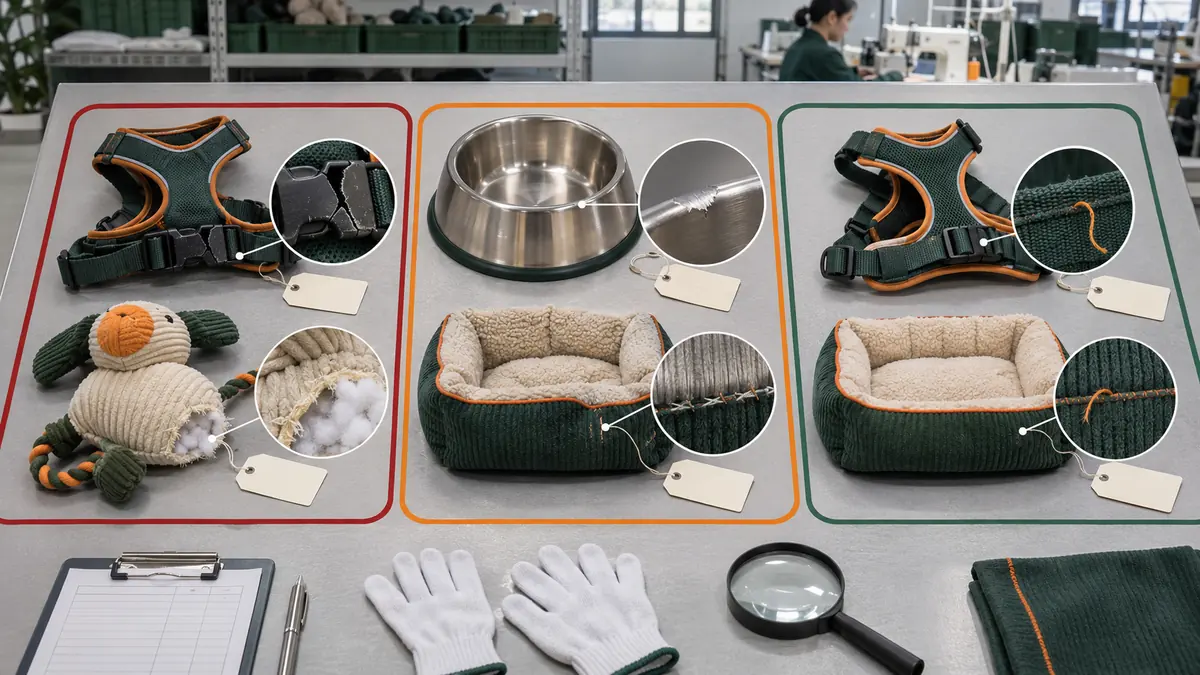
AQL defect classification gives every inspection finding a defined severity before the sample is counted. A critical defect concerns a credible safety or mandatory-compliance failure. A major defect prevents intended use, materially reduces performance or makes the product unsaleable. A minor defect is a limited departure from the approved standard that does not materially affect safety, primary function or saleability.
The answer to “How should pet product defects be classified as critical, major or minor?” begins with consequence, not frequency. Ask what one occurrence could do to the pet, handler, product function, retail sale or appearance. Then document an observable defect, measurement method, acceptance limit, reference photo and approved severity. The inspector should apply that definition consistently rather than decide severity after seeing the sample result.
This article focuses on severity definitions and product examples. Petlland’s guide to AQL inspection for pet products explains the broader inspection framework, while the AQL sampling-plan guide explains how lot size, inspection level and code letter determine the sample and Ac/Re numbers. Keeping these topics separate prevents the severity library from becoming a second sampling table.
Define the three classes
A critical defect is a condition that can make the product unsafe, create a credible risk of injury or illness, or breach a mandatory safety requirement in the target market. Examples may include sharp foreign metal in a plush toy, a cutting edge on a bowl rim, or missing safety information that the applicable requirement makes necessary. “Critical” should not be assigned casually. A qualified safety or compliance owner should confirm the hazard, foreseeable use, affected users and legal context.
A major defect substantially affects intended function, durability, fit, assembly or retail sale without an identified critical safety risk. A harness strap sewn outside its specified load path, a toy seam that opens under the approved performance test, a pet-bed seam exposing filling, or a crushed retail box that cannot be sold may be major. The classification assumes the safety review did not identify a higher-risk consequence.
A minor defect is a smaller departure from the signed specification, golden sample or cosmetic limit that does not materially change safety, primary function or saleability. Examples include a logo slightly outside its placement tolerance, one loose decorative thread, or a small finish speck outside the product’s high-visibility zone. A cosmetic issue can still be major when it is prominent enough to make the item unsaleable.
These classes are purchasing and quality-control conventions, not universal legal definitions. The product’s design, claims, user instructions, animal size, foreseeable misuse, market and applicable requirements can change the correct classification. ISO/IEC Guide 51 uses a risk-reduction approach for safety aspects, and the EU General Product Safety Regulation requires manufacturers within scope to perform an internal risk analysis and maintain technical documentation. Buyers should connect the defect library to that product-specific work.
Separate severity from frequency
Severity describes the consequence of one defect. Frequency describes how many times the defect appears in the inspected sample or lot. One confirmed sharp metal fragment may remain critical even if it is the only finding. Twenty loose decorative threads may still be minor findings, although the count can cause the sample to exceed the minor rejection number.
Do not downgrade a critical condition because it is rare, and do not upgrade a minor appearance issue merely because it appears often. Use the classification library to assign severity, then use the agreed AQL plan to decide whether the observed count accepts or rejects the lot. If repeated minor defects reveal a process failure, corrective action may be warranted even though the severity of each occurrence remains minor.
The inspection instruction must also say what is counted. A single unit can contain more than one defect: one pet bed might have an open seam, a stain and an incorrect label. The buyer should define whether the sampling plan counts defects, defective units or both for reporting. The defect library should give each condition its own ID so the tally can be audited.
Show category-specific examples
Product context determines why a defect matters. The examples below illustrate a buyer-side starting point. They are not substitutes for engineering, veterinary, toxicology, regulatory or legal review where that expertise is required.
| Category | Illustrative defect | Possible class | Reason and control |
|---|---|---|---|
| Dog harness | Load-bearing buckle cracks or releases during the specified retention test | Critical | Potential loss of restraint and foreseeable injury risk; confirm intended use and test conditions |
| Dog harness | Decorative logo is outside the signed placement tolerance | Minor | Appearance-only variance unless product identity or required information changes |
| Plush dog toy | Needle or sharp metal fragment is present | Critical | Sharp foreign-matter hazard; quarantine and investigate the affected production scope |
| Plush dog toy | Main seam opens and filling becomes accessible during the agreed seam test | Major | Function and durability failure; elevate if qualified review identifies a credible safety hazard |
| Pet bowl | Sharp burr is present on the rim | Critical | Potential cutting hazard under normal handling |
| Pet bowl | Small finish speck falls within the approved low-visibility cosmetic limit | Minor | Appearance-only condition within defined size, count and location limits |
| Pet bed | Main seam opening exceeds tolerance and exposes filling | Major | Containment and durability failure, subject to separate safety review |
| Packaging | Required safety warning or use limitation is missing | Critical | Classification depends on the applicable requirement and product risk |
| Packaging | Retail carton is crushed enough to be unsaleable while the product remains undamaged | Major | Saleability failure under the buyer’s approved packaging limits |
For dog harnesses, define buckle engagement, webbing damage, seam position, stitch count, pull method, reflective trim and cosmetic zones. For dog toys, define seam opening, stuffing access, squeaker retention, hard or sharp foreign matter, component security and surface finish. A photograph alone is not enough when the defect depends on force, dimension or test duration; record the method and limit beside the image.
Agree classifications before inspection
Create the defect library during product development, then approve it with the specification, drawing, golden sample, packaging artwork and inspection checklist. Each entry should include a stable defect ID, product and component, plain-language description, severity, observable evidence, measurement method, acceptance criterion, photo reference, target-market requirement, revision, approver and effective date.
Use photographs of real approved and rejected samples where possible. Show the defect at useful scale, mark the measurement points and keep the original image with date and sample reference. Avoid a generic caption such as “bad stitching.” A stronger entry says which seam, how the opening is measured, the maximum allowed length, whether filling is accessible and which signed revision applies.
The supplier and inspection company should receive the same revision. Record changes: who approved them, why the severity changed and which orders or production dates are affected. Do not let a factory substitute its internal cosmetic standard for the buyer’s signed limits unless the buyer approves that change.
ISO 2859-1:2026 supplies AQL-indexed lot-by-lot sampling plans, including sample sizes and acceptance/rejection thresholds. It does not create a universal defect library for pet products. The buyer must define what counts as critical, major or minor before applying the sampling plan.
Handle borderline defects
When a finding sits between two classes, stop guessing and follow a documented escalation rule. Quarantine the affected sample, preserve photographs and measurements, identify the lot scope, and send the evidence to the named buyer quality or safety owner. The inspector should not lower a severity to keep a shipment within its Ac/Re limit.
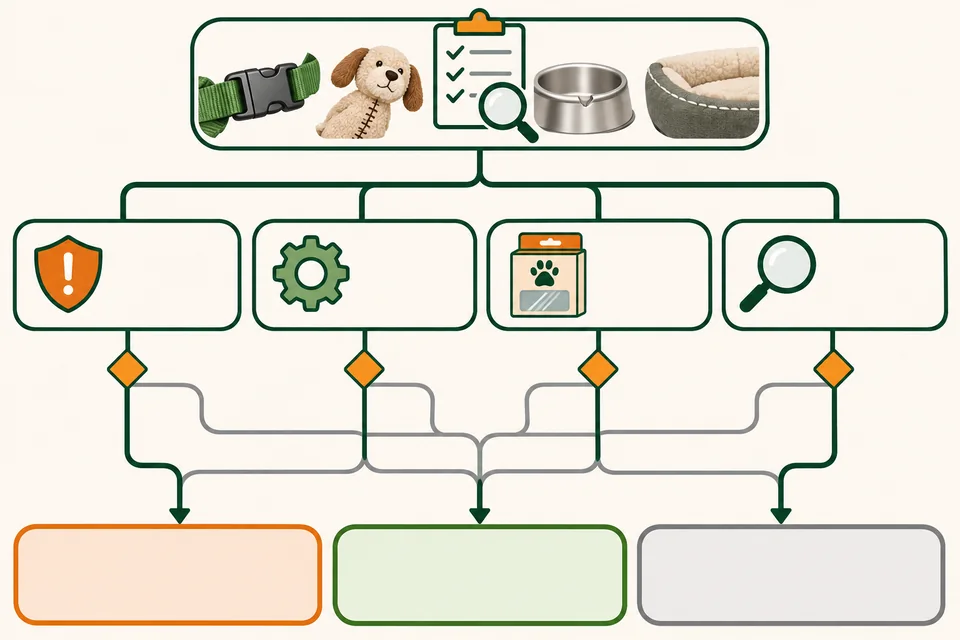
Ask four questions in order: Could the condition create a credible safety or mandatory-compliance problem? Does it prevent intended function or durability? Does it materially affect retail sale or cause a likely return? Is it limited to appearance within an agreed cosmetic zone? If the safety answer is uncertain, treat the finding as unresolved and obtain qualified review rather than automatically calling it major or minor.
After the decision, update the library only through revision control. Add the accepted description, photograph, method, limit, rationale and approver. Rebrief the supplier and inspectors before the next lot. A consistent library turns a one-off judgment into a repeatable control without pretending that every product has the same risk profile.
The downloadable template includes nine illustrative entries and blank rows for your own product. It also flags missing required fields and prevents an entry marked Approved from appearing complete without an approver and effective date.
FAQ
How should pet product defects be classified as critical, major or minor?
Classify the consequence of one occurrence. Use Critical for a confirmed safety or mandatory-compliance concern, Major for substantial function, durability or saleability failure without an identified critical risk, and Minor for a limited specification or appearance variance that does not materially affect safety, primary function or saleability.
Does a frequent minor defect become a major defect?
Not automatically. Severity and frequency are separate. The condition can remain minor while its count exceeds the minor rejection number. Repetition may still trigger corrective action or a process review.
Can an inspector decide severity during the inspection?
The approved library should classify expected defects before inspection. New or borderline findings should be documented and escalated to the named buyer quality or safety owner. The inspector should not change severity to influence the lot decision.
What belongs in a pet product defect library?
Include a defect ID, product and component, observable description, severity, impact, evidence, measurement method, acceptance limit, reference photo, market or standard, revision, approver, effective date and notes for escalation.
Is every missing warning a critical defect?
No. The answer depends on whether the information is required for safety or compliance in the target market and on the risk created by its absence. A qualified reviewer should make that determination for the specific product and claim.