A custom pet product sample costs more than a production unit because the supplier is completing development work for one or a few pieces instead of spreading that work across a production batch. The sample charge may combine prototype labor, small-quantity material purchasing, pattern or mold work, setup, packaging, revision rounds and international courier delivery. Buyers should compare sample proposals by stage, deliverable and included work—not by one headline fee.
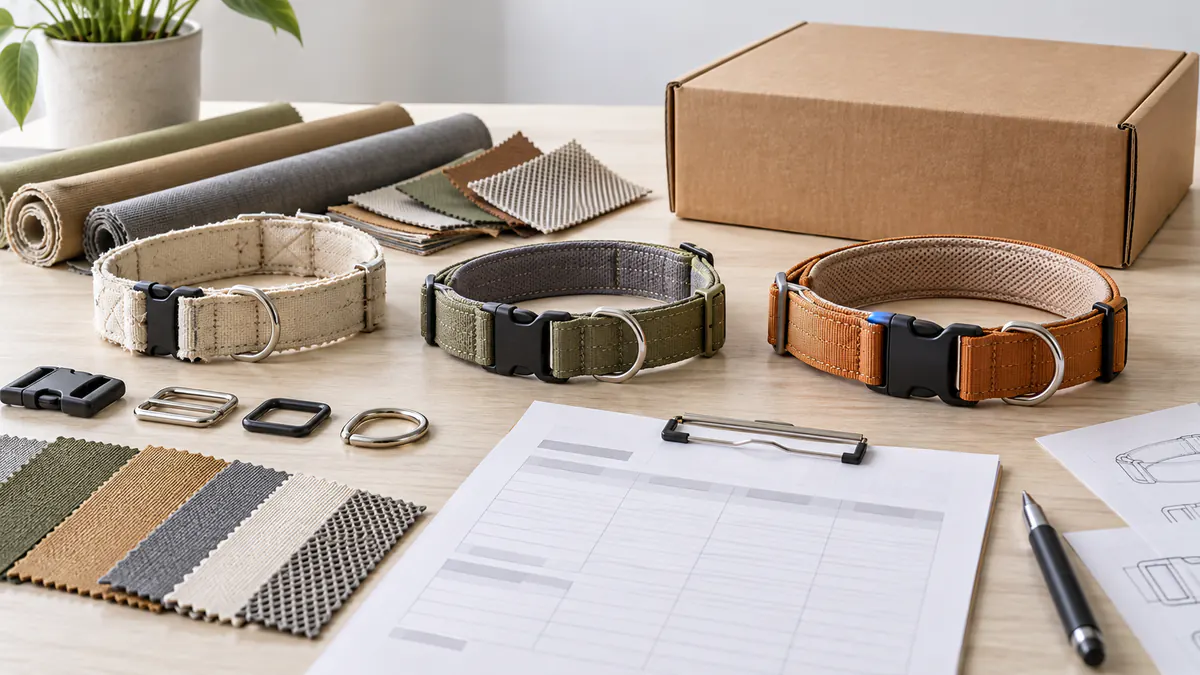
The useful question is not “What should a sample cost?” in isolation. It is “What development work, evidence and delivery are included in this sample stage?” A standard catalog sample may need little more than picking and packing. A custom sample can require new materials, construction decisions, component sourcing and several approval loops before it represents the intended production specification.
This guide explains how to structure a pet product sample cost review without presenting a private project as a universal market quote. Any numerical range in a supplier proposal should identify the currency, quotation date, product assumptions, sample quantity, delivery destination and exclusions.
Separate sample types
Begin by naming the sample stage. Suppliers and buyers often use “sample” for different deliverables, which makes fees appear inconsistent even when the underlying work is not comparable.
| Sample stage | Primary purpose | Typical acceptance question |
|---|---|---|
| Catalog or reference sample | Review an existing product, material or workmanship level | Is this supplier’s current capability relevant to the brief? |
| Concept prototype | Make the idea tangible and expose design risks | Does the proposed form, scale and construction direction work? |
| Functional sample | Check use, fit, assembly and key performance features | Does the product perform as intended under the agreed checks? |
| Revision sample | Verify documented changes after feedback | Were the listed corrections implemented without creating new defects? |
| Approval or golden sample | Lock the production reference | Is the sample complete enough to approve for mass production? |
A catalog sample should not be priced or evaluated like a new custom product prototype. Likewise, a visual mock-up is not automatically a functional or compliance-ready sample. State the stage, the files and materials supplied by the buyer, the number of pieces, and the decision the sample must support.
For the final approval stage, connect the physical sample to a controlled specification. The pet product golden sample and specification guide shows how to record dimensions, materials, color, workmanship, packaging and revision status so the approved sample can guide production rather than become an undocumented reference.
Break down cost drivers
Ask the supplier to separate development charges instead of returning only a single “sample fee.” The total can be expressed as a simple scope equation:
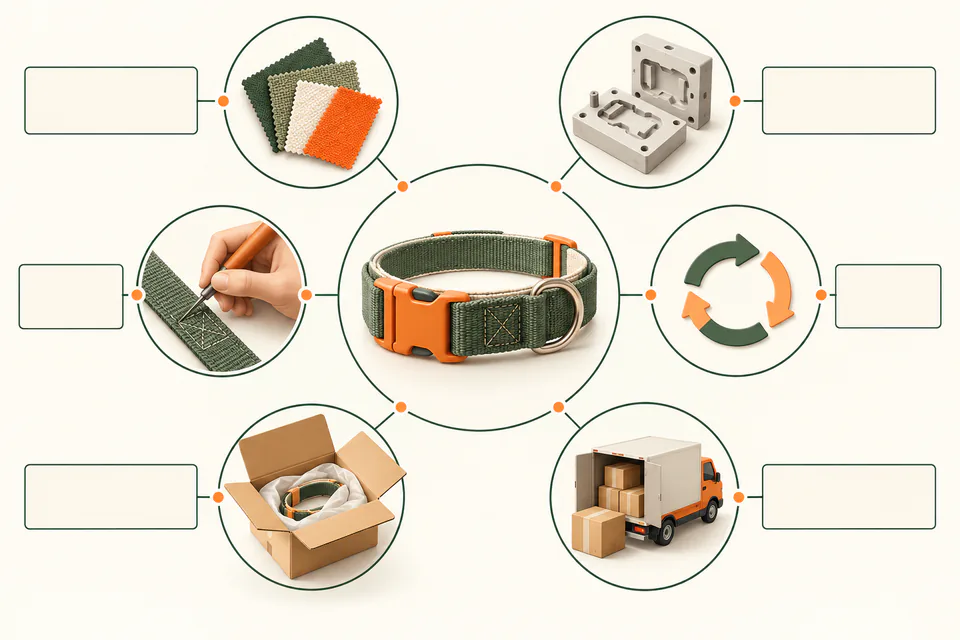
Sample-stage total = materials and components + development labor + patterns or tooling + setup and finishing + packaging + testing or inspection + courier and import charges.
Not every project includes every line. A sewn collar may need webbing, hardware, cutting and stitching setup but no hard mold. An injection-molded accessory may need tooling or a temporary prototype process that is unlike the eventual production method. A custom printed package may introduce artwork setup, plates or minimum print quantities even when the product itself is unchanged.
Use a dated, assumption-led comparison table for each supplier. Record the quoted currency; product and specification revision; sample stage and quantity; included materials; packaging; delivery destination; Incoterm or courier basis; expected completion date; and every exclusion. If a supplier offers a range, require the conditions that move the amount from the low end to the high end.
| Cost driver | What to document | Common comparison error |
|---|---|---|
| Special materials | Material grade, color, purchase quantity and unused balance | Assuming the sample can use production-volume material pricing |
| Pattern or mold | Temporary or production-intent tool, owner, storage and reuse rights | Comparing a hand-built prototype with a tooled sample |
| Development labor | CAD, pattern making, setup, assembly, finishing and project handling | Expecting one-piece labor to equal batch labor per unit |
| Packaging | Plain protective pack or production-intent retail packaging | Leaving artwork, plates, inserts or print minimums undefined |
| Evidence | Measurements, photos, test reports or inspection records included | Treating an undocumented visual sample as fully validated |
When comparing an original design with a supplier platform, review OEM and ODM development routes. Reusing a validated platform may reduce development work, while a unique construction can add engineering, pattern, tooling and verification steps.
Plan revision rounds
Revision cost is easier to control when feedback is consolidated. Before the first sample starts, agree how many review rounds are included, what counts as a correction, and what counts as a new design request. “Make it better” is not an actionable revision instruction; a numbered change list tied to the current drawing or specification is.
- Freeze the input revision. Give the supplier one approved brief, drawing set, bill of materials and artwork package.
- Review against acceptance criteria. Measure the sample, photograph issues and classify each item as pass, correction or new request.
- Return one controlled change list. Combine comments from product, compliance, packaging and commercial teams before sending feedback.
- Price scope changes before work restarts. A new dimension, material, mechanism or package may require more than a correction.
- Close each round in writing. Record which changes were implemented, deferred or rejected and identify the next sample revision.
Ask the supplier whether an included revision covers labor only or also replacement materials, new printing, tool changes and another courier shipment. If the first sample fails to match the approved brief, the correction responsibility may differ from a buyer-requested design change. Put that distinction in the sample agreement or purchase order instead of negotiating it after the sample arrives.
A clean revision history also protects quality later. The approved sample should match the final controlled files. If the supplier builds mass production from an outdated revision, physical approval alone will not resolve which requirement governed.
Account for courier and customs
Courier cost can be a meaningful part of a one-piece sample because the shipment has a minimum billable weight, packaging volume and destination charge even when the product is light. Ask for package dimensions, actual weight, chargeable weight, courier service level, origin, destination and the party responsible for import clearance, duties and taxes.
State the delivery basis precisely. The International Chamber of Commerce explains that Incoterms® 2020 allocate defined costs, risks and obligations between seller and buyer. For an express sample, the commercial invoice, courier instruction and agreed trade term should tell the same story.
Do not ask a supplier to declare a false value or describe a commercial sample as valueless. U.S. Customs and Border Protection states that the commercial invoice should show the price paid and include relevant additions such as assists, production costs and packing where applicable; foreign-currency values must be converted for U.S. entry documents. Classification, valuation and duty treatment depend on the shipment facts, so confirm the entry approach with the courier or a qualified customs professional.
Testing samples also need logistics planning. Some regulated products require testing and certification by the manufacturer or importer, and children’s products subject to applicable requirements generally need testing by a CPSC-accepted laboratory. The CPSC testing and certification overview is a useful starting point, but the correct evidence depends on the product, intended use and destination market. Decide whether the supplier ships test pieces directly to a laboratory, whether the laboratory destroys them, and who pays for replacement samples and retesting.
Agree credit and ownership terms
Some suppliers may credit an agreed sample charge against a later production order, but this is a commercial term—not an automatic right. Put the condition in writing: the eligible amount, minimum order value or quantity, time limit, production order reference, and whether courier, testing, tooling or third-party charges are excluded.
Handle ownership separately from fee credit. Paying for a sample does not by itself define ownership of CAD files, patterns, molds, jigs, artwork, prototypes or unused materials. For each development asset, record who paid, who owns it, where it is stored, whether it can be used for other customers, how long it will be retained and what happens when the supplier relationship ends.
For projects that may require production tooling, use the planned custom pet product tooling cost guide to separate temporary prototype methods from production-intent molds and fixtures. Until that guide is live, include tooling questions directly in the RFQ and sample agreement.
Before authorizing work, ask for a sample-stage estimate with these fields:
- quotation date, currency and validity period;
- product name, specification revision and sample stage;
- sample quantity and acceptance goal;
- itemized materials, labor, pattern, tooling, packaging and evidence;
- included revision rounds and price basis for additional changes;
- sample completion date and courier basis;
- credit conditions for a later production order;
- ownership, storage and permitted-use terms for development assets; and
- explicit exclusions, assumptions and buyer-supplied inputs.
Request a sample-stage and cost estimate. Send Petlland your product concept, target market, expected quantity and current files so the required sample stages, evidence and supplier questions can be defined before development starts.
Frequently asked questions
Why does a custom pet product sample cost more than a production unit?
The supplier must recover one-off or small-batch work such as material sourcing, pattern or mold preparation, setup, development labor, manual finishing, documentation and courier handling across only one or a few pieces. Production pricing spreads repeatable setup across a larger batch.
Should a supplier refund the sample fee after a production order?
Only if the quotation or agreement says so. Confirm the exact credit amount, qualifying order, deadline and excluded charges. Courier, testing, tooling and third-party costs may be treated differently from the supplier’s own sample labor.
How many sample rounds should a custom product need?
There is no universal number. The route depends on design maturity, material availability, tooling, performance risk, packaging and regulatory evidence. Define the purpose and acceptance criteria for each round, then price changes before additional work begins.
Who owns a custom sample mold or pattern?
Ownership follows the written agreement, not an assumption based only on payment. Record ownership, storage location, maintenance, exclusivity, permitted use, retention period and transfer or disposal terms for every development asset.
What information makes sample cost proposals comparable?
Use the same specification revision, sample stage, quantity, material and packaging assumptions, destination, delivery basis and evidence requirements. Require each supplier to separate one-time charges, included revisions, exclusions, credit terms and ownership conditions.