Consolidation cuts landed cost when several suppliers ship small, bulky, low-density cargo to one destination on a repeating cycle. Merging them into one booking removes duplicated origin, entry and delivery charges, and re-cartoning removes paid-for air. It does not pay when one supplier already fills a container, or when lead times are far apart.
By Petlland Sourcing Team | Reviewed by Petlland Quality Control Team | Last reviewed: 21 September 2026
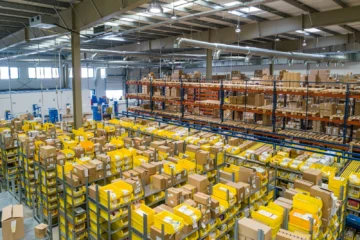
Pet products are the wrong shape for freight. A bolster bed weighs almost nothing and occupies a small fridge. A cat tree is mostly air held in place by cardboard. A crate of ceramic bowls is dense and heavy but small. Put four suppliers of these things on four separate shipments a month and you are not paying four freight bills — you are paying four sets of documentation, four customs entries, four destination handling charges, four deliveries, and four intakes at the other end.
Consolidation merges those into one cargo. It is the most reliable cost lever a small brand has, because it does not require you to negotiate a rate, change a supplier, or increase an order. But it is sold with more enthusiasm than arithmetic, and it genuinely does not pay on some order profiles. This guide gives you the model: how bulky cargo is actually charged, which cost lines disappear and which appear, a worked before-and-after case you can recompute with your own carton dimensions, the point at which consolidated LCL should become a full container, and the five situations where consolidating is the wrong answer.
No rates appear below. Ocean and air pricing moves weekly and any number published here would be wrong by the time you read it, so everything is expressed as an index or a formula you can fill in from your own two quotes.
Key takeaways
- Bulky pet products are charged on volume, not weight. Below roughly 1,000 kg per cubic metre at sea, and 167 kg per cubic metre by air, you pay for the space. Almost every soft pet product is far below both.
- The saving is mostly in the fixed charges, not the ocean leg. Documentation, security filing, customs entry, destination handling and last-mile delivery repeat per shipment. Four shipments pay them four times; one cargo pays them once.
- Re-cartoning usually beats rate negotiation. A carton 20 mm too wide can cost a quarter of your pallet layer. That loss is paid on every shipment, forever, and no forwarder discount recovers it.
- Consolidation has its own cost line. Inbound handling, re-cartoning, palletising, storage beyond the free window, and the working capital tied up while you wait for the slowest supplier. Model the waiting cost before you agree the cycle.
- Buy on FCA to the warehouse, not FOB. FOB under the ICC Incoterms® 2020 rules ends when goods are on board a vessel. Goods delivered to a consolidation warehouse never go on board anything at that point, so FOB leaves the risk transfer undefined.
Why bulky pet products pay for air
Carriers do not sell weight. They sell the scarcer of weight and space, and they price whichever one your cargo consumes first. For pet products it is almost always space.
The two chargeable-weight rules
By air. Volumetric weight is the shipment’s volume in cubic centimetres divided by 6,000, and you are charged on whichever is higher, volumetric or actual. The 6,000 divisor is the IATA industry standard; Maersk notes that some carriers apply 5,000 instead, which charges bulky cargo more. A divisor of 6,000 means the break-even density is 167 kg per cubic metre — above that you pay on real weight, below it you pay on air.
By sea, LCL. Less-than-container-load cargo is quoted per revenue ton under the W/M convention: one revenue ton is one cubic metre or one tonne, whichever is greater. The break-even density is therefore 1,000 kg per cubic metre. Nothing in the pet category comes close.
Run the number on your own cargo before anything else. Density in kilograms per cubic metre is total gross weight divided by total volume, and it tells you immediately which lever matters:
| Typical carton | Carton size (cm) | CBM per carton | Gross weight | Density (kg/CBM) | What you pay for |
|---|---|---|---|---|---|
| Bolster beds, 4 per carton | 60 × 50 × 50 | 0.150 | 8 kg | 53 | Volume, heavily |
| Cat tree, knock-down | 70 × 45 × 40 | 0.126 | 14 kg | 111 | Volume |
| Harnesses and leads, 40 sets | 50 × 40 × 35 | 0.070 | 11 kg | 157 | Volume at sea, borderline by air |
| Ceramic bowls, 12 per carton | 40 × 30 × 25 | 0.030 | 19 kg | 633 | Volume at sea, weight by air |
| Chew toys, solid rubber | 40 × 30 × 30 | 0.036 | 22 kg | 611 | Volume at sea, weight by air |
The practical consequence: for a pet brand, every cubic centimetre of packaging air is a permanent, recurring line on the freight bill. That is why the first thing a consolidation programme should touch is the carton, not the rate.
Which costs consolidation removes, and which it adds
Merging four cargoes into one does not make the ocean leg disappear — eleven cubic metres are eleven cubic metres whether they travel as one consignment or four. What disappears is repetition. Every shipment carries a set of charges that are indifferent to how small it is, and a small shipment pays them in full.
| Cost line | Charged per | Four separate shipments | One consolidated cargo | Effect |
|---|---|---|---|---|
| Ocean or air main leg | Volume or chargeable weight | 4 bookings, no volume tier | 1 booking, better tier | Falls with cube reduction and scale |
| Origin documentation, bill of lading, seal | Shipment | ×4 | ×1 | Falls sharply |
| Importer Security Filing (US ocean imports) | Shipment | ×4 filings, ×4 exposure | ×1 filing | Falls, and so does penalty risk |
| Destination terminal handling and devanning | Shipment, partly volume | ×4 | ×1 | Falls sharply |
| Customs entry and brokerage | Entry | ×4 entries | ×1 entry | Falls sharply |
| Import duty and taxes | Classification and value | Same | Same | No change — duty follows the goods |
| Last-mile delivery | Delivery | ×4 deliveries | ×1 delivery | Falls |
| Receiving and re-labelling at your 3PL | Intake | ×4 intakes | ×1, or zero if labelled before departure | Falls |
| Consolidation warehouse handling | Carton or CBM | Zero | New line | Rises — this is the cost of the programme |
| Re-cartoning and palletising | One-off plus per shipment | Zero | New line | Rises, then pays for itself in cube |
| Storage beyond the free window | Day or CBM-day | Zero | New line if suppliers run late | Rises with poor scheduling |
| Working capital tied up while waiting | Day | Low | Higher | Rises — usually the forgotten one |
One filing point is worth stating precisely, because it is a real and under-appreciated saving for US importers. Under 19 CFR part 149, an Importer Security Filing is required for cargo arriving by vessel, filed by the ISF Importer — the party causing the goods to arrive — with most data elements due no later than 24 hours before the cargo is laden aboard the vessel at the foreign port. Four shipments mean four filings, four deadlines and four opportunities for a late or inaccurate filing. One cargo means one. Note that consolidating does not remove the container stuffing location and consolidator elements; those are still reportable, and your consolidator has to give them to you on time.
A worked case you can recompute
Here is one month of resupply for a mid-sized pet brand buying from four factories in Guangdong and selling into one US warehouse. The carton specifications are the ones above. Nothing here is a rate; everything is an index where the four-shipment total is set to 100.
Step 1 — the cube, before anything is changed
| Supplier | Product | Cartons | CBM each | Total CBM | Total kg |
|---|---|---|---|---|---|
| A | Bolster beds | 40 | 0.150 | 6.00 | 320 |
| B | Knock-down cat trees | 30 | 0.126 | 3.78 | 420 |
| C | Harnesses and leads | 12 | 0.070 | 0.84 | 132 |
| D | Ceramic bowls | 18 | 0.030 | 0.54 | 342 |
| Total | — | 100 | — | 11.16 | 1,214 |
Two things follow immediately. First, supplier A is 54% of the freight bill on 26% of the weight — the beds are the problem, not the bowls. Second, at 11.16 CBM this cargo is well short of a container, so LCL is the right mode and the question is only how many shipments it travels as.
Step 2 — before and after, as an index
| Cost line | Four separate LCL shipments | One consolidated cargo | Why it moves |
|---|---|---|---|
| Main ocean leg | 56 | 47 | Cube cut 16% by re-cartoning; same lane, one booking |
| Origin documentation and handling | 9 | 3 | One set of documents instead of four |
| Destination terminal and devanning | 11 | 6 | One consignment; part of the charge still follows volume |
| Customs entry and brokerage | 8 | 2 | One entry instead of four |
| Last-mile delivery | 11 | 5 | One delivery, one receiving appointment |
| 3PL intake handling and re-labelling | 5 | 0 | Labels applied before departure |
| Consolidation warehouse handling and re-cartoning | 0 | 8 | New cost the programme introduces |
| Total index | 100 | 71 | 29% off the freight and handling line |
Recompute it with your own cargo in four steps. Take your last four supplier shipments. Add up the charges that repeat per shipment — documentation, security filing, entry, brokerage, destination handling, delivery, intake — and divide by four: that is what one shipment’s worth of repetition costs you, and consolidation removes three of them. Then measure your cube reduction from re-cartoning and apply it to the main leg only. Finally subtract the consolidation handling quote and the carrying cost of the waiting days. If the result is not clearly positive, your cargo is either too dense, too urgent or already too close to a container.
Cartonisation: the saving that comes before the freight saving
The 16% cube reduction in the table above is not a negotiation. It is geometry, and it is the part of consolidation that most buyers never see because their four suppliers each design a carton in isolation.
The pallet layer test
Take a 1,200 × 1,000 mm pallet: 1.20 m² per layer. A 600 × 500 mm carton tiles it perfectly — four per layer, no waste. Now widen the carton by 20 mm to 620 × 500. Two of them side by side need 1,240 mm and the pallet is 1,200 mm, so you cannot get two across. The layer drops from four cartons to three. You have lost 25% of the layer to 20 mm of cardboard, and you will pay for that loss on every shipment you ever make.
The container height test
The same trap works vertically. A 40 ft high-cube dry container has an internal height of 8 ft 10 ⅛ in, about 2,696 mm, on Maersk’s published equipment specification. Put cargo on a 150 mm pallet and you have roughly 2,546 mm of stacking height. Cartons 500 mm tall give you five layers, 2,500 mm, and it fits. Cartons 520 mm tall need 2,600 mm for five layers, so you load four and lose 20% of the stack. Twenty millimetres again.
What to actually change
- Set one carton module across all four suppliers and make it a footprint that tiles your pallet — 600 × 500, 600 × 400 and 400 × 300 mm all divide a 1,200 × 1,000 pallet cleanly. Give suppliers the module before they tool the carton, not after.
- Compress what compresses. Beds, mats and soft crates are the single biggest cube win in the category. Vacuum or roll-compression on beds routinely takes a third out of the carton; the offset is a recovery period after unpacking, which you should test on a sample before committing.
- Nest and knock down. Bowls, crates, carriers and cat trees ship flat or nested if the product is designed for it. This is a design decision made at sample stage, and it is far cheaper to make then.
- Kill the void. Master cartons sized for a retail box that later shrank, dividers nobody needs, and 40 mm of air at the top of every carton are all paid freight. Ask for a fill-rate photograph of a packed master carton at inspection.
- Do not trade cube for damage. A thinner carton that saves 4% of volume and adds 2% crush losses is a bad trade. Set the compression target, then re-run a drop and stack test before it becomes standard.
When consolidated LCL should become a full container
Consolidation eventually outgrows LCL. The switch to a full container load is worth checking every quarter, because LCL is charged per revenue ton and FCL is charged per box — once the box is reasonably full, FCL is usually cheaper and always faster, since it skips devanning at a container freight station.
Maersk’s published dry equipment specification gives the usable envelope:
| Container | Nominal cubic capacity | Maximum payload | Realistic palletised fill | Fills first on pet products? |
|---|---|---|---|---|
| 20 ft standard | 33 m³ | 28,200 kg | ~25–28 m³ | Volume, every time |
| 40 ft standard | 67 m³ | 28,800 kg | ~54–60 m³ | Volume |
| 40 ft high cube | 76 m³ | 28,620 kg | ~62–68 m³ | Volume |
The break-even is a single division, and you can do it with the two quotes in front of you:
Break-even volume (CBM) = all-in FCL cost for the box ÷ all-in LCL cost per revenue ton
Use door-to-door totals on both sides, including origin charges, destination handling, devanning and delivery — not the ocean line alone. If your consolidated monthly cube is above the break-even, book the box. If it is just below, check whether one more supplier or one month of stock takes you over, because an FCL also shortens transit and removes a handling step where cartons get damaged.
As a working guide, brands consolidating 12–16 CBM a month usually find a 20 ft box competitive, and anything above 25 CBM belongs in one. But the ratio between LCL and FCL pricing swings with the market, which is why this is a formula rather than a threshold.
The costs consolidation adds
A consolidation pitch that lists only savings is incomplete. Four real costs come with the programme.
1. Waiting, which is a capital cost
The cargo leaves when the last supplier arrives. If supplier A is ready on day 5 and supplier D on day 20, A’s goods sit for fifteen days that you have already paid for. Price it: waiting cost = value of goods waiting × your cost of capital per day × days waiting, plus the margin on any sales you lose to a stockout. On fast-moving core SKUs this can erase the freight saving completely, which is the argument for splitting your range into a consolidated cycle for the slow lines and direct shipment for the hero SKU.
2. Storage and handling
Inbound receiving, checking, re-cartoning, palletising, labelling and loading are real work and they are charged. So is storage once the free window closes. A programme with a disciplined cut-off date rarely pays storage; a programme where suppliers drift does, and it is the quiet way a consolidation saving disappears.
3. Concentrated risk
Four shipments spread exposure across four sailings. One cargo does not. A customs examination, a rolled sailing or a damaged container now affects your whole month of stock rather than a quarter of it. This is a genuine trade-off, not a detail: insure the consolidated cargo properly, and if a single event would take you out of stock across the range, keep a buffer or stagger the cycle.
4. Accountability gets harder
When four suppliers’ cartons are re-packed onto shared pallets, a shortage or a damage claim needs evidence that survives the merge. Insist on per-supplier inbound counts, photographs at receipt, and carton-level marks that identify the origin factory after re-palletising. Without that, every claim becomes an argument.
Five order profiles you should not consolidate
- One supplier already fills the box. If a single factory’s monthly cargo is close to a container, ship it direct as FCL and consolidate only the rest. Routing a full container through a warehouse buys you handling charges and nothing else.
- Lead times further apart than your storage window. When one supplier runs four weeks behind the others, you are financing inventory to save on documentation. Re-phase the purchase orders first; consolidate only once the ready dates cluster.
- Dense, small, high-value goods. Ceramic bowls, metal fittings and electronics accessories are heavy for their size, so the volume saving is small while the handling cost is the same. They often travel better as part of someone else’s cargo, or by express when urgent.
- Time-critical launches and replenishment. A launch date, a marketplace deal or a stockout does not wait for the slowest factory. Ship it direct, by air if needed, and put the next cycle into the consolidation programme.
- Goods with different regulatory handling. Anything with a shelf life, a temperature requirement, or an agency filing attached to it can hold an entire entry while it is resolved. Keep those lines on their own entry rather than letting one SKU detain a month of stock.
Getting the Incoterms rule right
Consolidation changes where your suppliers hand over, and most buyers forget to change the term to match. Under the ICC Incoterms® 2020 rules, FOB is one of four rules written for sea and inland waterway transport, and the seller’s delivery is complete when the goods are on board the vessel. A supplier trucking cartons to a consolidation warehouse in Guangzhou is not putting anything on board a vessel, so an FOB purchase order describes something that will not happen.
The correct rule for delivery to a named warehouse is FCA, with the warehouse address as the named place. Risk and cost pass on delivery there, which is exactly the handover you have actually agreed. EXW works too if you are genuinely arranging collection from the factory, but it leaves export clearance with you, which is rarely what a first-time importer wants. On the outbound leg, the consolidated cargo can then move under whichever rule suits the destination — and the FOB versus DDP comparison sets out what changes between them.
How Petlland runs a consolidation programme
Our consolidation warehouse opened in Baiyun District, Guangzhou in 2022 and receives multi-supplier cargo with 30 days of free storage per programme. The relevant point for this article is not the building; it is that consolidation only works when the inspection, the re-cartoning and the labelling happen in the same place, before the cargo is sealed.
- Your existing factories, onboarded as they are. A consolidation programme does not require you to switch suppliers or renegotiate. We also work across 60+ audited partner factories when you want an alternative quoted alongside.
- Inbound check and count per supplier, so a shortage is identified against the factory that caused it rather than discovered at your 3PL six weeks later.
- AQL 2.5 major-defect inspection as the default standard, with 96% of shipments released on first inspection across our client base. Consolidating defective stock is the most expensive version of this service, which is why inspection sits before palletising, not after.
- Re-cartoning to one module, labelling and palletising before departure, so the cargo arrives ready to put away rather than ready to re-handle.
- One cargo, one set of documents, moving as sea FCL door to door in 28–38 days, sea LCL consolidated in 32–42 days, air in 8–12 days or express in 4–7 days, delivered to the location you designate, with DDP and duty prepaid available in many markets.
One published programme shows what the operational side looks like twelve months either side of the change. A US seller with 40 SKUs and four established suppliers kept every supplier and changed only the flow:
| Metric | Before | After |
|---|---|---|
| Shipments per month | 4 | 1 |
| Freight cost index | 100 | 74 |
| Customs entries per year | 48 | 12 |
| Re-labelling at 3PL | Every intake | None |
| Stockouts on core SKUs | 7 / year | 1 / year |
Note the last row. The freight saving is the headline, but the stockout reduction came from a predictable monthly arrival replacing four irregular ones — and for most brands that is worth more than the 26%.
Setting one up in six steps
- Measure what you actually ship. Cartons, dimensions and gross weights per supplier for the last three months. Calculate CBM and density per line. You cannot model a saving without this and no forwarder can do it for you.
- Fix the carton module. One footprint that tiles your pallet, issued to all suppliers as a specification, with a height that stacks cleanly inside the container you will eventually use.
- Re-phase the purchase orders so ready dates cluster inside one week. This single step decides whether the programme pays, and it costs nothing.
- Change the Incoterms rule to FCA at the warehouse address, and confirm in writing who pays inland haulage from each factory.
- Put inspection before palletising. Defects found after re-cartoning cost twice. Our AQL inspection guide covers the standard to specify, and the supplier audit checklist covers the factories you are onboarding.
- Review the mode every quarter. Run the break-even division above. Growing brands cross from LCL to FCL faster than they expect, and nobody will tell you the day it happens.
Common mistakes
- Comparing ocean lines instead of door-to-door totals. The saving lives in the charges that repeat per shipment. A comparison that stops at the freight line will show consolidation barely working.
- Negotiating the rate before fixing the carton. A 16% cube reduction beats almost any discount you will win this quarter, and it does not expire.
- Ignoring the waiting cost. If the programme is holding three weeks of stock to save on documentation, the finance is going the wrong way.
- Leaving a consolidated cargo uninsured. Concentrating a month of stock into one consignment and skipping cargo insurance is the worst risk position in this whole article.
- Consolidating first and inspecting later. Once cartons are merged and palletised, a defect found at destination is a re-work problem on another continent.
- Assuming duty falls too. It does not. Duty follows the classification and the value of the goods, however they travel.
Frequently asked questions
When does multi-supplier consolidation actually reduce landed cost?
When you have three or more suppliers shipping small, low-density cargo to the same destination on a repeating cycle, and their ready dates can be brought within about a week of each other. Those conditions let one cargo absorb the documentation, security filing, customs entry, destination handling and delivery charges that each separate shipment would otherwise pay in full. With one supplier, dense cargo, or ready dates weeks apart, the handling and waiting costs usually cancel the saving.
How much does consolidation typically save?
Across our client base the average saving after consolidation is 23% on the freight and handling line, and one published 40-SKU programme moved from a freight cost index of 100 to 74. Bulky, low-density ranges sit at the higher end because they gain twice — once from removing duplicated fixed charges, and again from re-cartoning. Dense ranges gain less. Duty and product cost do not change at all.
How long will my goods wait for the slowest supplier?
That is a scheduling decision, not a fact of consolidation. A programme with a published cut-off date ships on that date and rolls late cargo to the next cycle; a programme without one waits indefinitely. Set the cut-off, re-phase your purchase orders so ready dates cluster, and price the waiting days at your own cost of capital before agreeing the cycle length.
Is consolidated LCL cheaper than a full container?
Only below the break-even volume. LCL is charged per revenue ton, FCL per box, so divide the all-in door-to-door FCL cost by the all-in LCL cost per revenue ton to get the crossover in cubic metres. A 20 ft standard container holds 33 m³ nominal and realistically 25–28 m³ palletised, so pet brands consolidating more than roughly 12–16 m³ a month should re-check the comparison every quarter. FCL is also faster, because it skips devanning.
Do I still need a separate customs entry for each supplier?
No. Goods from several suppliers arriving as one consignment to one importer are normally declared on one entry, with each line classified on its own merits. That is where much of the saving comes from. Duty itself does not change, and for US ocean imports the Importer Security Filing obligation under 19 CFR part 149 also collapses from one filing per shipment to one for the cargo — though the container stuffing location and consolidator details still have to be reported.
What Incoterms rule should I buy on if goods go to a consolidation warehouse?
FCA, with the warehouse as the named place. FOB is written for sea and inland waterway transport and completes only when goods are on board a vessel, so it does not describe a delivery to a warehouse and leaves the risk transfer point undefined in practice. EXW is workable if you are genuinely collecting from the factory, but it leaves export clearance with you.
Can consolidation reduce the volumetric weight I am charged?
Not by merging cargo on its own — eleven cubic metres are eleven cubic metres. It reduces chargeable volume through what happens in the warehouse: re-cartoning to one module that tiles the pallet, compressing beds and mats, nesting or knocking down rigid items, and removing void fill. By air the divisor is 6,000 under the IATA standard, so every 6,000 cm³ you remove takes a kilogram off the bill.
What should never go into a consolidated cargo?
Anything time-critical, anything with a shelf life or temperature requirement, anything carrying an agency filing that could hold the whole entry, and any supplier whose volume already fills a container. Also keep your fastest-moving core SKU out of the cycle if a single exam or rolled sailing would take you out of stock on it.
Sources and review notes
- IATA: Air Cargo Tariffs and Rules, on volumetric weight and the 6,000 divisor used to derive chargeable weight. Reviewed 21 September 2026.
- Maersk: Air cargo chargeable weight, confirming the IATA 6,000 divisor and noting carriers that apply 5,000. Reviewed 21 September 2026.
- Maersk: dry container equipment specifications, for internal dimensions, cubic capacity and maximum payload of 20 ft standard, 40 ft standard and 40 ft high-cube containers. Reviewed 21 September 2026.
- 19 CFR part 149, Importer Security Filing (eCFR), for who must file, the data elements, and the requirement to file no later than 24 hours before lading at the foreign port. Reviewed 21 September 2026.
- International Chamber of Commerce: Incoterms® 2020 rules, for the FCA and FOB definitions and the sea-and-inland-waterway scope of FOB. Reviewed 21 September 2026.
- Petlland case studies: anonymised 40-SKU consolidation programme and the 23% average freight saving across the client base, reviewed 21 September 2026.
Editorial note: this article explains commercial and operational practice and publicly available customs guidance; it is not legal, customs or tax advice, and it quotes no rates because ocean, air and handling pricing change continually. Incoterms® is a registered trademark of the International Chamber of Commerce and the published ICC text governs over any summary here. Container capacities are carrier-published nominal figures; achievable fill depends on your cartons and pallets. US filing requirements are set by CBP and change — confirm the current position with CBP or a licensed customs broker on the day you act. Index figures are illustrative models built from the carton specifications shown, not quotations.
Get the consolidation modelled on your own cargo
Send the number of suppliers, the carton dimensions and gross weights, your monthly quantities and the destination. Petlland will work out the combined cube and density, show what re-cartoning to one module would recover, and compare your current shipping pattern with one consolidated cargo delivered to the location you designate — including the cases where the answer is that you should not consolidate yet.
Deciding the shipping term for the outbound leg? Compare FOB and DDP for pet product imports. Onboarding new factories into the programme? Run the 15 supplier checks before paying a deposit and set the AQL inspection standard before anything is palletised. Still at the first-order stage? Start with launching a private label pet brand at 100 units.