FOB gives you control and a lower quoted number; DDP gives you one figure and no customs work. For a growing pet brand, DDP is usually safer until volume justifies your own forwarder — provided you verify who is named as importer of record, which in the United States changed materially in 2026.
By Petlland Sourcing Team | Reviewed by Petlland Quality Control Team | Last reviewed: 17 September 2026
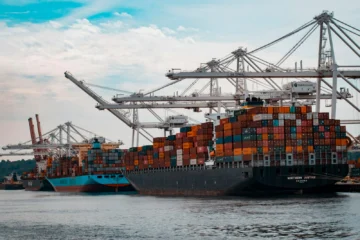
Two suppliers quote the same 500 pet beds. One quotes FOB Shenzhen and the number looks excellent. The other quotes DDP to your warehouse and the number looks high. Six weeks later the FOB order has cost more than the DDP one, and nobody lied to you: the FOB quote simply stopped at the ship’s rail, and everything after that arrived as separate invoices.
This guide runs one scenario — 500 bolster beds from Guangdong to a warehouse in the United States — through both terms. It sets out what each rule obliges each party to do under the ICC Incoterms® 2020 rules, which cost lines appear under which term, who carries the risk when something goes wrong, and what the 2026 changes to US importer of record rules mean for anyone buying DDP. It does not quote rates: freight pricing moves weekly and any figure published here would mislead you. Petlland quotes both terms for the same cargo on request, and the comparison below is how to read those two quotes side by side.
Key takeaways
- FOB and DDP are the two ends of the range. Under FOB the seller’s job ends when the goods are on board; under DDP the seller carries everything including import clearance and duty. Every other rule sits between them.
- An FOB quote is not a landed cost. Ocean freight, destination charges, customs brokerage, duty, bond, delivery and demurrage all land on you afterwards, and the last two are the ones no one forecasts.
- DDP’s real risk is not price, it is who is named as importer of record. If a supplier imports under someone else’s IOR number to make DDP work, the exposure lands on your goods, not on their paperwork.
- US rules tightened in 2026. Executive Order 14411 restricts foreign importers of record, and CBP began enforcing importer identity data accuracy on 18 September 2026. Ask your supplier which entity clears your goods, in writing.
- “FOB” on an air shipment is the wrong rule. FOB is for sea and inland waterway transport only. For containers handed over at a yard, or anything flown, FCA is the correct Incoterms rule.
What the two rules actually oblige
Incoterms® are published by the International Chamber of Commerce and define the obligations, costs and risks between seller and buyer. The current edition is Incoterms® 2020. They are not law and they do not transfer title; they allocate tasks, costs and the point at which risk passes.
FOB — Free On Board
The seller clears the goods for export and delivers them on board the vessel you nominate at the named port of shipment. Risk passes to you at that moment. From there, the main carriage, insurance, import clearance, duties and onward delivery are yours to arrange and pay for.
FOB is one of the four Incoterms rules written for sea and inland waterway transport. This matters more than most buyers realise. If your beds move as a container handed over at a container yard, or as an air shipment, the goods are not delivered “on board” anything and FOB does not describe what happens. The correct rule is FCA, and using FOB anyway creates a gap between what your contract says and where your risk actually sits — a gap that only becomes visible when cargo is damaged at the terminal.
DDP — Delivered Duty Paid
DDP is the maximum obligation for the seller. They deliver the goods to the named place in the destination country, cleared for import, with all duties and taxes paid, ready for unloading. Risk passes when the goods arrive at that place. You supply an address and a receiving window; everything else is the seller’s problem.
The ICC is direct about where DDP breaks. Its guidance notes that under DDP “the seller is ultimately responsible for the import clearance process and any associated challenges”, that import clearance “may be difficult for a foreign seller”, and that where customs authorities require the local importer to clear the goods themselves, “DDP cannot be used, and DAP would be the appropriate Incoterms® rule”. That sentence is the whole reason the section below on importer of record exists.
The responsibility and cost matrix
This is the table to put next to your two quotes. Every line is a task somebody must perform and an invoice somebody must pay. Under FOB the right-hand column is yours — whether or not the quote mentioned it.
| Stage | Cost line | Under FOB | Under DDP | Usually missing from the quote? |
|---|---|---|---|---|
| Factory | Production, packing, cartons and marks | Seller | Seller | No |
| Origin | Inland haulage factory to port | Seller | Seller | No |
| Origin | Export clearance and customs declaration | Seller | Seller | No |
| Origin | Terminal handling, documentation, seal and VGM | Seller to on board; buyer’s forwarder may still invoice origin fees | Seller | Yes — split origin charges are the classic FOB surprise |
| Main leg | Ocean or air freight | Buyer | Seller | No — but it is quoted separately and moves weekly |
| Main leg | Cargo insurance | Buyer — and neither rule obliges anyone to buy it | Seller’s interest, not necessarily yours | Yes — frequently simply absent |
| Destination | Destination terminal handling and port fees | Buyer | Seller | Yes |
| Destination | Customs brokerage and entry filing | Buyer | Seller | Sometimes |
| Destination | Import duty, tariffs and import taxes | Buyer | Seller | No — but the classification behind it is rarely shown |
| Destination | Customs bond, or single entry bond | Buyer | Seller | Yes |
| Destination | Importer of record obligations and liability | Buyer, openly | Seller — verify which entity | Yes — the single most important omission |
| Destination | Last-mile delivery to your warehouse | Buyer | Seller | Yes |
| Destination | Unloading at your door | Buyer | Buyer — DDP stops at ready for unloading | Yes, under both |
| Exception | Demurrage, detention and storage after free time | Buyer | Seller, unless caused by you | Yes — and it is the fastest-growing line |
| Exception | Customs examination, X-ray or intensive exam | Buyer | Seller | Yes |
| Exception | Retroactive duty, penalty or reclassification | Buyer | Depends entirely on who was importer of record | Yes |
Two rows deserve a second look. Unloading is the buyer’s cost under both rules — DDP delivers the goods ready for unloading, not unloaded, so a DDP quote does not include a lift gate or a labour crew at a warehouse without a dock. And insurance is nobody’s obligation under either rule. FOB and DDP both stay silent on it, so unless you asked, the cargo may be moving uninsured.
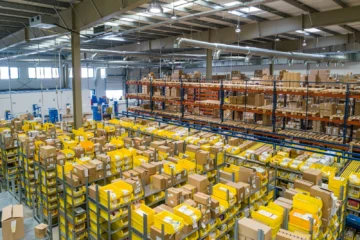
The importer of record question, and why 2026 changed it
Under DDP somebody must be the importer of record in the destination country. The IOR is legally responsible for the accuracy of the entry, the classification, the valuation and the duty — and remains liable long after the goods are delivered. A Chinese supplier quoting DDP to a US address either is that entity, or is using one.
In the United States that arrangement is now materially harder. Executive Order 14411, Strengthening Customs Enforcement, was signed on 3 June 2026 and published in the Federal Register on 10 June 2026. Among its provisions, it directs that foreign importers of record be prohibited from filing informal entry, that foreign IORs filing formal entry either hold CTPAT validation or use a CTPAT-validated licensed customs broker, that continuous bonds not be permitted for foreign IORs unless CBP determines revenue is fully protected, and that importer of record eligibility be revised to require a minimum level of tangible domestic assets, bonding, or both. The order sets implementation milestones at 45, 90 and 180 days, placing the IOR eligibility rewrite at the end of November 2026.
Enforcement has already begun on the data side. CBP published a notice on 19 August 2026 on the accuracy of importer of record data submitted on Form 5106, effective 18 September 2026, requiring that the physical address be the actual place of business rather than a PO box, registered agent or third-party address, and that the email address and telephone number belong to the importer itself. The notice states that inaccurate information may result in the importer of record number being voided.
Read those two together and the practical consequence for a pet brand is simple. A DDP price that depends on an IOR arrangement CBP is now actively scrutinising is not a cheap price, it is an unpriced risk sitting on your inventory. Ask three questions before you accept any DDP quote into the United States, and get the answers in writing:
- Which legal entity will be named as importer of record on the entry, and what is its IOR number? If the answer is vague, that is the answer.
- Which licensed customs broker files the entry, and is it CTPAT validated? You are entitled to the broker’s name.
- Which HTS classification is being used, and who signed off on it? Classification drives duty, and a wrong one is your problem if you are the IOR and the supplier’s problem if they are.
If a supplier cannot answer these, the honest structure is not DDP. It is DAP — delivered to your door with import clearance in your own name — or FOB with your own forwarder. Both are more transparent than a DDP price whose clearance mechanism nobody will describe.
The scenario: 500 pet beds to a US warehouse
Bolster beds are the hardest pet category to freight well. They are light, they are bulky, and they are charged on volume rather than weight, so the cost is decided by how well the cartons are built long before anyone quotes a rate. Here is how the same 500 beds behave under each term.
Under FOB
- You appoint a forwarder in China and give the supplier their booking details. The supplier delivers to the port and clears export.
- Risk becomes yours on board. If the vessel is delayed, rolled or the container is damaged at sea, that is your loss, and your insurance question.
- You appoint a US customs broker, file the entry in your own name, post a bond, pay duty, and arrange trucking from the port to your warehouse.
- You see every cost, control every vendor, and own every exception — including the demurrage clock if your broker is waiting on a document.
Under DDP
- You give an address, a receiving window and the dock details. One figure per unit covers the goods to that door.
- Risk stays with the seller until the truck arrives. A rolled sailing, an exam, a demurrage charge or a reclassification is the seller’s cost, not a surprise invoice for you.
- You cannot see the component costs, so you cannot benchmark the freight rate. You are buying a fixed landed cost and paying a premium for certainty.
- Your entire exposure sits in the IOR question above. Answered properly, DDP is the lowest-admin route into a market. Answered evasively, it is the highest-risk one.
Petlland quotes both, on the same cargo, in the same sheet: sea FCL door to door at 28–38 days, sea LCL consolidated at 32–42 days, air at 8–12 days and express at 4–7 days, with DDP available to 38 destination countries. Goods are delivered to the location you designate; door-to-door is available in some regions. Our service fee is quoted inside the unit price, so the sheet shows one landed figure per unit with nothing added later — which is precisely the comparison an FOB quote cannot give you on its own.
Which one should a growing pet brand choose?
| Your situation | Usually the better term | Why |
|---|---|---|
| First or second import, no broker relationship | DDP | One counterparty, one number, no bond to arrange. The learning curve costs more than the premium. |
| Selling into several countries at low volume each | DDP | Each market has its own clearance regime. Buying that expertise per shipment beats building it five times. |
| Steady monthly volume, one or two lanes | FOB | Volume earns forwarder rates, and visibility of each cost line is worth the admin once it repeats. |
| Multiple suppliers on one cargo | Either, after consolidation | Consolidating first is what moves the number. The Incoterms choice is secondary to shipping once instead of four times. |
| Cash flow is the binding constraint | FOB | Duty and freight fall due at different points rather than as one payment before dispatch. |
| Importing into the US and the supplier will not name the IOR | Neither — use DAP or FOB | An unexplained DDP clearance mechanism is a liability you cannot price or insure. |
For most brands the honest sequence is DDP while you are learning the market, FOB once a lane repeats monthly and you can hold a forwarder to a rate. The mistake is choosing on the quoted number rather than on which organisation is better placed to absorb an exception.
Six mistakes that turn a good quote into a bad one
- Comparing an FOB number with a DDP number. They measure different distances. Rebuild the FOB quote to your door, with every line from the matrix above, before you decide.
- Writing “FOB” without a named port, or on an air shipment. “FOB China” is not a term; “FOB Shenzhen, Incoterms® 2020” is. For air or yard handover, use FCA.
- Assuming DDP includes unloading. It does not. If your warehouse has no dock, the lift gate and the labour are yours and they are not cheap at short notice.
- Leaving cargo uninsured. Neither rule requires it. On a bulky, low-density category where a wet container ruins the lot, that is a poor gamble.
- Accepting a DDP price without asking who clears. After the 2026 US changes this is the question, not a formality. Get the entity, the number and the broker in writing.
- Optimising the Incoterms rule before optimising the carton. Pet beds pay on volume. Compression packing and a better carton module usually beat any rate negotiation you will win this quarter.
Frequently asked questions
Is FOB or DDP safer and more economical for a growing pet brand?
DDP is usually safer and often cheaper in total for a brand doing a handful of shipments a year, because the seller absorbs exceptions — exams, demurrage, rolled sailings — that a first-time importer has no way to forecast. FOB becomes more economical once a lane repeats monthly and you can hold a forwarder to a contracted rate. The deciding factor is who can absorb an exception, not which number looks lower.
What does an FOB quote leave out?
Everything after the goods are on board: ocean or air freight, cargo insurance, destination terminal charges, customs brokerage, duty and import taxes, the customs bond, last-mile delivery, unloading, and any demurrage, detention or examination costs. Origin charges can also arrive separately depending on how your forwarder splits them. Rebuild the quote line by line to your own door before comparing it with anything.
Who is the importer of record under DDP?
The seller, or an entity the seller arranges. That party is legally responsible for the entry’s accuracy, classification, valuation and duty, and stays liable after delivery. Because the supplier is foreign, this is the part of DDP most likely to be structured loosely, so ask which entity is named, what its importer of record number is, and which licensed customs broker files the entry.
Did US rules on DDP imports change in 2026?
Yes. Executive Order 14411, signed 3 June 2026, directs restrictions on foreign importers of record including a prohibition on informal entry, a CTPAT validation or CTPAT-validated broker requirement for formal entries, limits on continuous bonds, and revised eligibility requiring minimum tangible domestic assets or bonding, with milestones at 45, 90 and 180 days. Separately, CBP began enforcing importer of record data accuracy on Form 5106 from 18 September 2026. Verify the current position with CBP before you rely on any structure.
Can I use FOB for an air shipment?
You should not. FOB is one of the Incoterms® 2020 rules written for sea and inland waterway transport, and it turns on goods being placed on board a vessel. For air freight, express, or a container handed to a carrier at a yard or terminal, FCA is the correct rule. Using FOB anyway leaves the risk transfer point undefined in practice, which only matters on the day something is damaged — which is exactly when it matters most.
What is the difference between DAP and DDP?
Both deliver to your named place. Under DAP the buyer handles import clearance and pays duties and import taxes; under DDP the seller does. DAP is the right choice when the destination country’s rules make it difficult or impossible for a foreign seller to clear the goods, which the ICC identifies as the main reason to prefer it. For US buyers in 2026, DAP is often the cleaner structure precisely because clearance happens in your own name.
Does DDP include unloading at my warehouse?
No. DDP delivers the goods ready for unloading at the named place; the unloading itself is the buyer’s cost and risk under the rule. If your site has no loading dock, budget separately for a lift gate and labour, and tell your supplier the site constraints before the quote rather than when the truck arrives.
Sources and review notes
- International Chamber of Commerce: Incoterms® 2020 rules, the current edition. Reviewed 17 September 2026.
- ICC Academy: Incoterms® 2020 — DAP or DDP?, on the seller’s import clearance responsibility and when DAP is the appropriate rule. Reviewed 17 September 2026.
- Executive Order 14411, Strengthening Customs Enforcement, signed 3 June 2026, Federal Register 10 June 2026. Reviewed 17 September 2026.
- US Customs and Border Protection: Accuracy of Importer of Record Data Submitted to CBP, published 19 August 2026, effective 18 September 2026. Reviewed 17 September 2026.
- Petlland: consolidation and DDP fulfilment module, freight options and quoting practice, reviewed 17 September 2026.
Editorial note: this article explains commercial terms and publicly available customs guidance; it is not legal, customs or tax advice, and it quotes no rates because freight pricing and tariff levels change continually. Incoterms® is a registered trademark of the International Chamber of Commerce and the rules are defined in the ICC’s published text, which governs over any summary. US customs requirements are changing on a published implementation timetable through 2026, so confirm the current position with CBP or a licensed customs broker on the day you act, and confirm duty by obtaining a classification for your own product rather than relying on a general figure.
See both numbers for the same cargo
Send your product, carton dimensions, quantity and destination address. Petlland will quote the same shipment two ways — FOB at the port of loading and DDP to the location you designate — with the cost lines broken out, so you can see exactly what the gap between them buys you before you commit.
Before the goods ship, make sure they are worth shipping: our guide to AQL inspection for pet products covers the pre-shipment check, and auditing a supplier in China covers the 15 checks to run before the deposit. New to importing altogether? Start with launching a private label pet brand at 100 units.